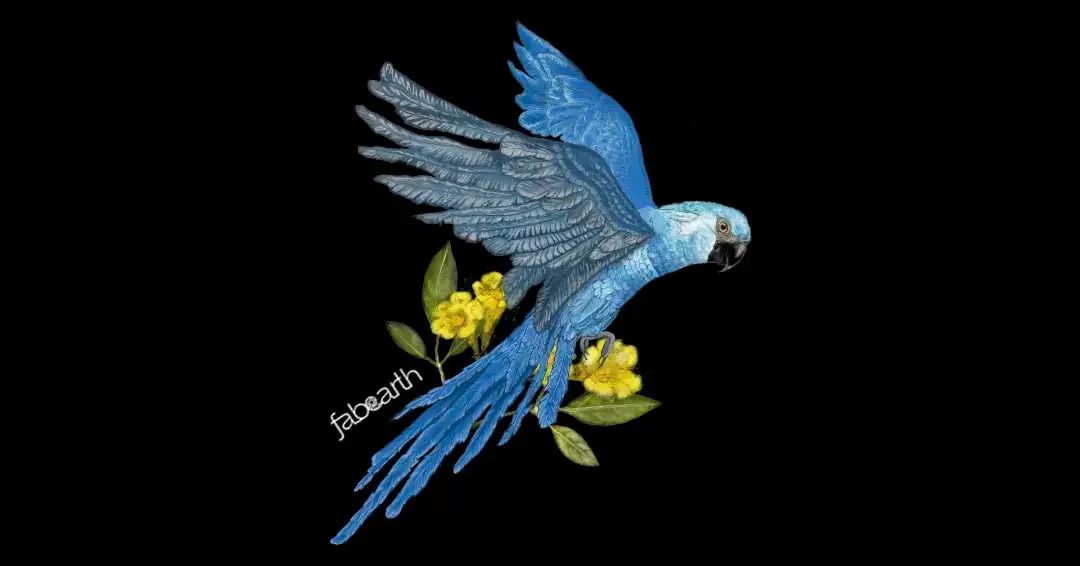
Spix's Macaw
Cyanopsitta spixii
The little blue macaw of Brazil — extinct in the wild since the early 2000s.
Wear it on a T-shirt
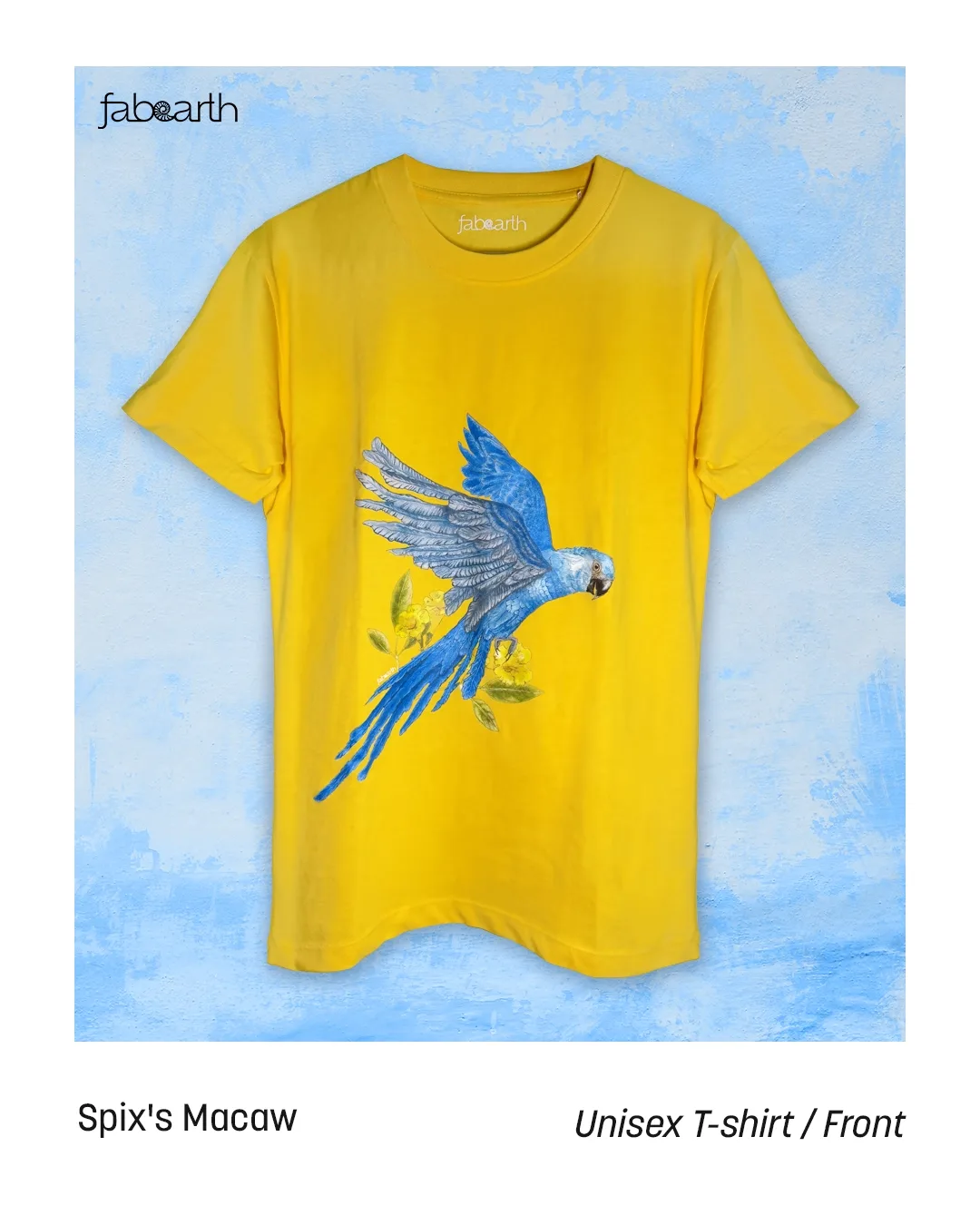
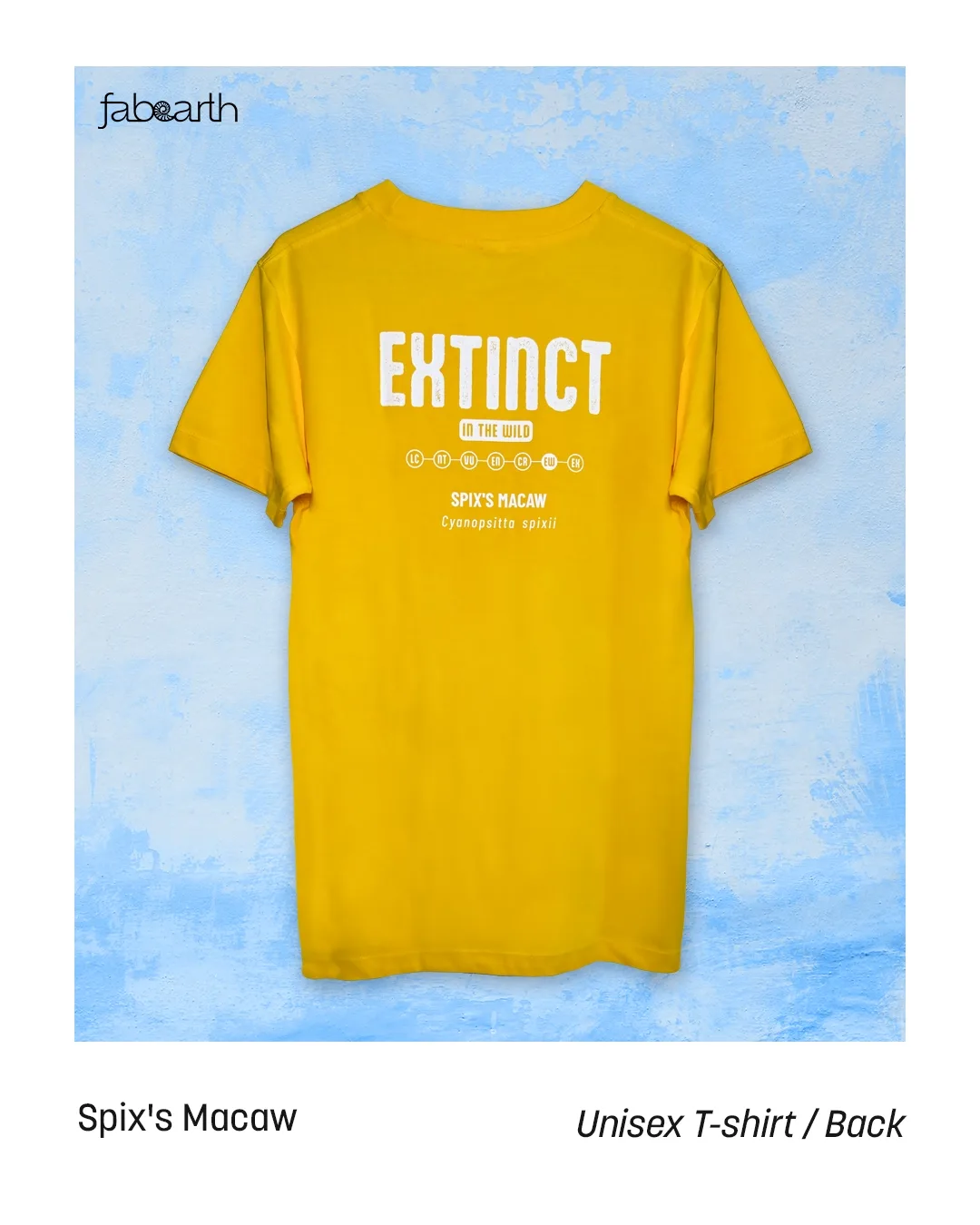
T-shirt Regular Unisex Yellow
₹899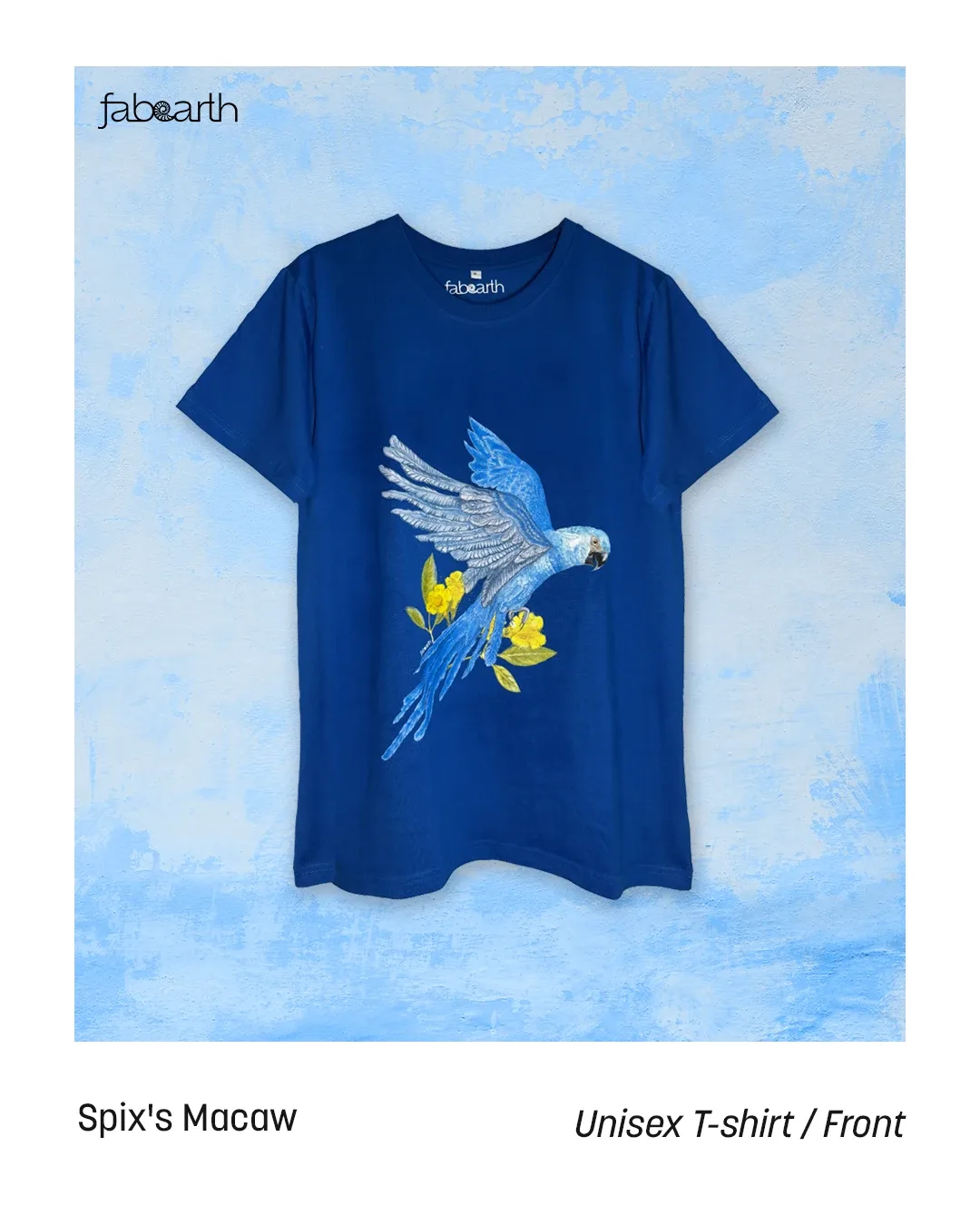
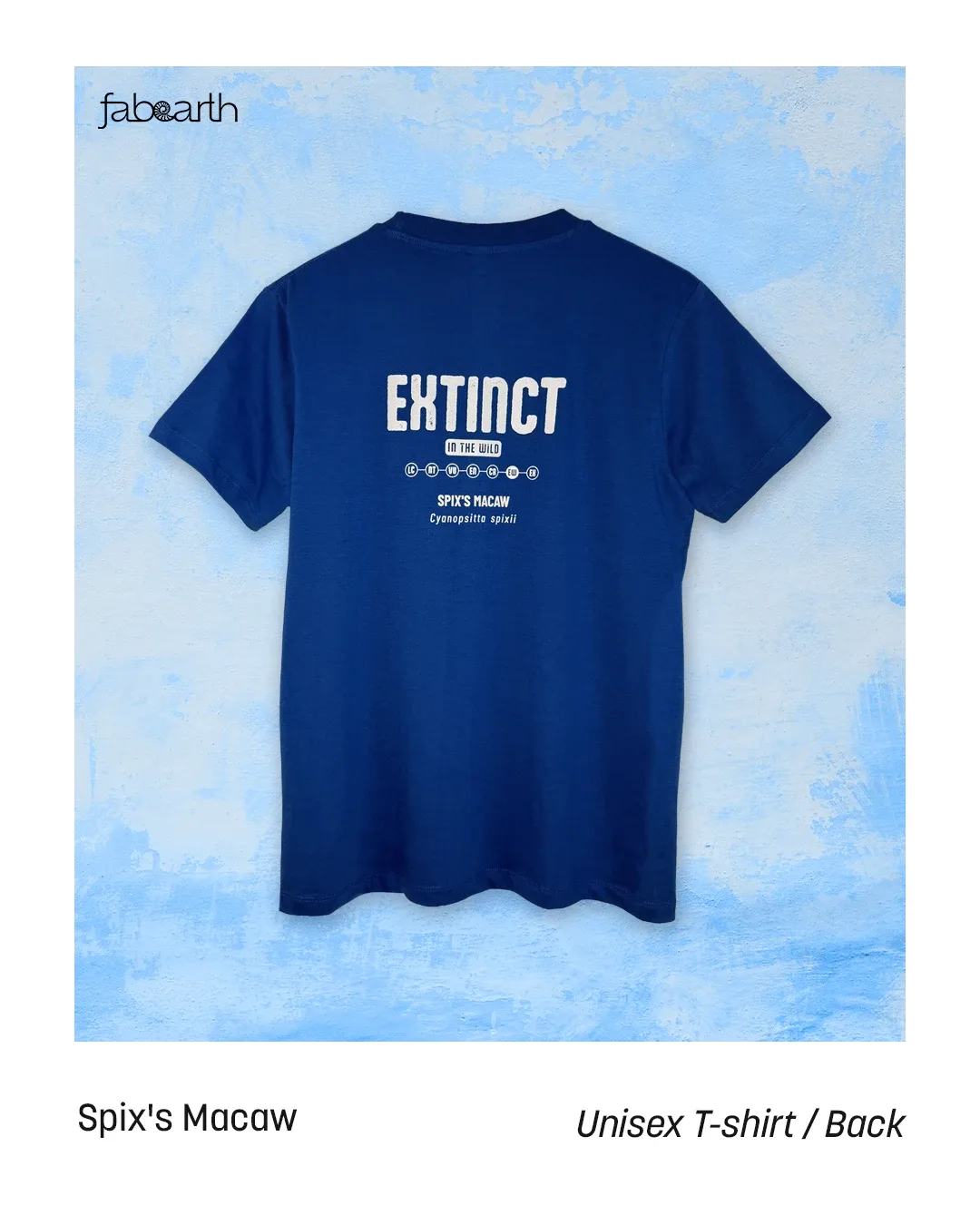
T-shirt Regular Unisex Royal Blue
₹899The blue macaw that lost its wild home
Spix's macaw (scientific name: Cyanopsitta spixii) is the little blue macaw of Brazil's Caatinga. It once lived in a narrow stretch of dry forest along the Rio Sao Francisco, especially around Curaçá in Bahia, where river-edge woodland gave it food, nesting cavities, and shelter from the heat.
Its conservation status is Extinct in the Wild. That label matters here: the species is not gone, but the original wild population disappeared. The last known wild bird vanished in 2000, after decades of trapping for the bird trade, habitat loss, and the slow erosion of the gallery forests it depended on.
Why the Caatinga matters
Spix's macaw was never a generalist parrot spread across Brazil. Its story is tied to a specific dry landscape and to the trees that made that landscape livable. The bird used mature riparian woodland in the Caatinga, a semi-arid region where shade, nesting hollows, and seasonal food can be concentrated along watercourses.
That narrow habitat is what makes recovery difficult. A cage-bred bird can still be a Spix's macaw, but a wild Spix's macaw needs a working home: trees old enough to nest in, enough food through dry periods, and a landscape where released birds can avoid predators, power lines, and human pressure.
What recovery depends on
The Spix's macaw is now a test of whether extinction in the wild can be reversed. Captive breeding kept the lineage alive, but reintroduction asks a harder question: can birds raised under human care learn enough, survive enough, and breed enough to become a self-sustaining wild population again?
The answer depends on more than releasing birds. Conservation work has to rebuild habitat, protect nest sites, monitor released macaws, reduce avoidable deaths, and keep enough genetic diversity in the breeding population. For Spix's macaw, recovery is not a single event; it is the long repair of a broken relationship between a bird and one small part of Brazil.