About
Conservation awareness for the next generation — told through the species we stand to lose.
Why we made this
Fabearth was founded by Urvi Khanna — an anthropologist, artist, educator, and mother who lives and works in New Delhi. She works with a small team — her family — with Nirvan keeping the species profiles factually honest and Prabhat advising on strategy and operations.
It began with a question familiar to many parents: What kind of planet are we leaving behind? This is a passion project — small, deliberate, and personal. The goal is not to dress people in slogans, but to put a face on what we are losing — and to make that loss easier to talk about, especially with a child.
Fabearth is not a solution to the planetary crisis — and it doesn't pretend to be. It is a way to give expression to our concern, our questions, and our hope.
What we're up against
The numbers are not abstract. They are the shape of a planet thinning out within a single human lifetime.
Species at risk of extinction within decades — many before they're even named.
Source · UN IPBES 2019
Forest lost worldwide each year — a football field every 2.3 seconds.
Source · FAO Forest Assessment 2020
Global warming above pre-industrial baselines — reshaping habitats faster than species can adapt.
Source · NASA Climate Vital Signs
What the numbers describe is sometimes called defaunation — the quiet emptying of ecosystems by way of declining animal populations, even when the species themselves haven't yet vanished. A forest can look unchanged from a satellite while losing half its birds. Coral reefs can bleach and slowly come back, but the fish that depended on them may not.
Loss is also uneven. Charismatic megafauna — tigers, rhinos, whales — attract most conservation funding, while equally threatened amphibians, insects, and freshwater species receive a fraction of the attention.
Our catalog includes the famous and the overlooked — a Bengal tiger beside a satanic leaf-tailed gecko, a vaquita beside a golden birdwing butterfly.
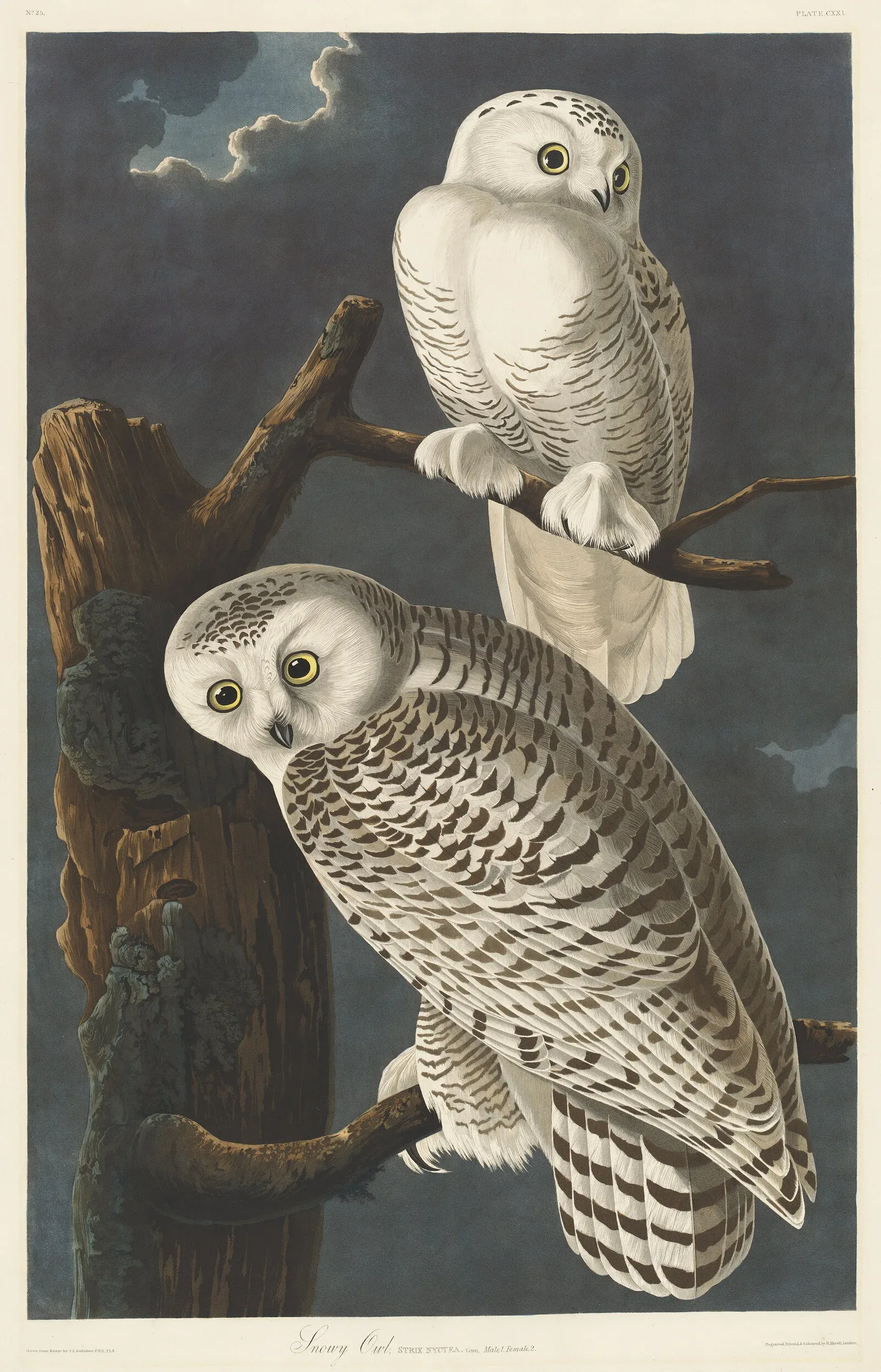
There is also the slower problem of shifting baselines: each generation grows up with a more depleted natural world than the last, and accepts it as normal. A child today may never see a snowy owl in the wild. The risk is not only that species disappear, but that we forget they were ever common.
The Earth is the only world known so far to harbor life. There is nowhere else, at least in the near future, to which our species could migrate. Like it or not, for the moment the Earth is where we make our stand.
How we work
Each Fabearth garment is built around a single endangered species. The artwork is original — Urvi's drawings, adapted for the canvas of cloth. The species profile that accompanies it is researched against primary sources (global conservation assessments, peer-reviewed literature, conservation organisations) and fact-checked before it goes on the site.
Each garment carries the species' Conservation Status — Least Concern, Near Threatened, Vulnerable, Endangered, Critically Endangered, Extinct in the Wild, Extinct — because the label is the story.
We celebrate the uniqueness of endangered species. We support conservation educators and initiatives. And we try to keep the operation small enough that every piece can carry real attention — both to the animal and to the wearer.
We're not trying to save the world from a Delhi studio. We're trying to make the world's losses feel less abstract, one species at a time.
You don't need to be an expert to care
If you've ever paused to admire a moth, worried about a vanishing forest, or wondered what kind of world you're handing over to your children — this brand was made for you.
Explore the species we chronicle, or see what's in the catalog.
Instructions for living a life:
Pay attention.
Be astonished.
Tell about it.
Wear what you stand for. Start a conversation. Turn concern into culture; turn care into action.