Rusty Patched Bumble Bee
Bombus affinis
Common enough to be ignored, then gone from most of its range — the first bee of the continental United States to need federal protection.
The bee that vanished from ordinary places
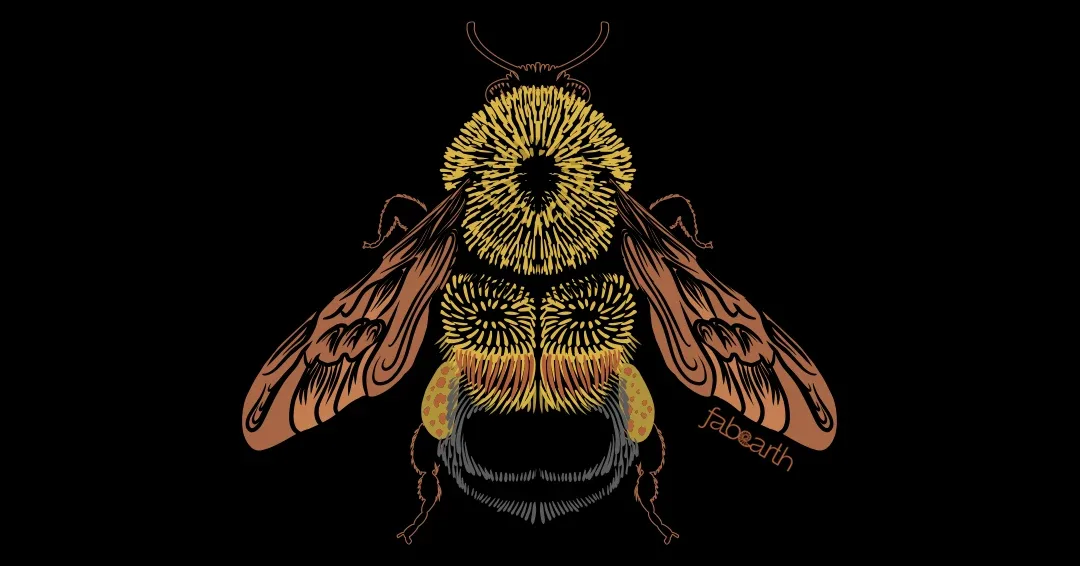
Rusty Patched Bumble Bee (scientific name: Bombus affinis) is a stout, thickly furred bumble bee of the grasslands, prairies, woodland edges, and gardens of eastern North America. Workers and males carry a small rust-coloured patch on the back of the abdomen, sitting on yellow — the mark the species is named for. Queens do not have it.
Its conservation status is Critically Endangered. In 2017 it also became the first bumble bee, and the first bee anywhere in the continental United States, to be protected under the country's Endangered Species Act.
The striking part is how recently it was ordinary. Into the 1990s this was a bee nobody thought about: widespread from the Upper Midwest through the Northeast and down the Appalachians, across roughly two dozen US states and into Ontario and Québec. Within about two decades its abundance fell by close to 90%, leaving a scatter of small populations in a fraction of that range.
A colony that lasts one summer
A bumble bee colony is not a beehive that persists for years. It is an annual project, and it starts with a single queen.
She wakes from winter in early spring, finds an abandoned rodent burrow or a cavity underground, and raises the first workers alone. The colony builds through summer — several hundred bees at its peak — and then spends its last weeks producing new queens and males. When frost comes, the founding queen, the workers, and the males all die. Only the newly mated queens survive, each waiting out winter in a shallow hollow in the soil to begin again.
The rusty patched is among the first bumble bees flying in spring and among the last in autumn. That long season is a strength and a dependency: it needs something in bloom from April through October, not one good week of wildflowers. And because every colony traces back to one queen, a bad spring for a queen is not a lost bee. It is a lost colony.
What a bumble bee does that others cannot
Bumble bees pollinate by shaking. A bee grips a flower, uncouples its wings, and vibrates its flight muscles hard enough to shiver the pollen loose — buzz pollination, which honey bees do not perform. Tomatoes, peppers, cranberries, and blueberries all give up their pollen most readily this way.
Bombus affinis was also a generalist, visiting a wide spread of flowering plants rather than specialising in a few. That is what made it useful across farms, prairies, and backyards, and it is why its absence is not one missing thread. A generalist pollinator in decline quietly loosens many connections at once.
Why it declined so fast
No single cause explains a fall this steep. Pathogen spillover is a leading suspect: commercial bumble bees raised for greenhouse pollination can carry parasites into wild populations that never met them before. Systemic pesticides compound it, turning up in the pollen and nectar the bees collect rather than staying where they were sprayed. Underneath both sits habitat loss — the tallgrass prairie and flower-rich grassland this bee depended on are among the most reduced ecosystems on the continent.
Then small populations begin to work against themselves. In bees, an individual that inherits too little genetic variety develops into a sterile male instead of a working female. A shrinking, isolated population produces more of those dead ends, which shrinks it further.
What recovery depends on
Helping this bee is unusually concrete. It needs flowers in continuous succession from early spring to late autumn, not one summer flush. It needs ground left alone — untilled soil, leaf litter, and rough edges where a queen can nest and overwinter. It needs pesticide use pulled back where it overlaps with foraging, and commercial pollinators kept free of the diseases they can hand on.
It also needs to be found. A bee this scarce is hard to survey, and much of what is known about where it still flies comes from photographs sent in by people who learned to recognise the patch.
The rusty patched bumble bee is a reminder that a species does not have to be remote or spectacular to be lost. This one disappeared from roadsides, farms, and gardens, in daylight, while nobody was counting. The same pressures press on wild bees elsewhere, including the bumble bees of the Himalaya. Noticing them earlier is most of the work.