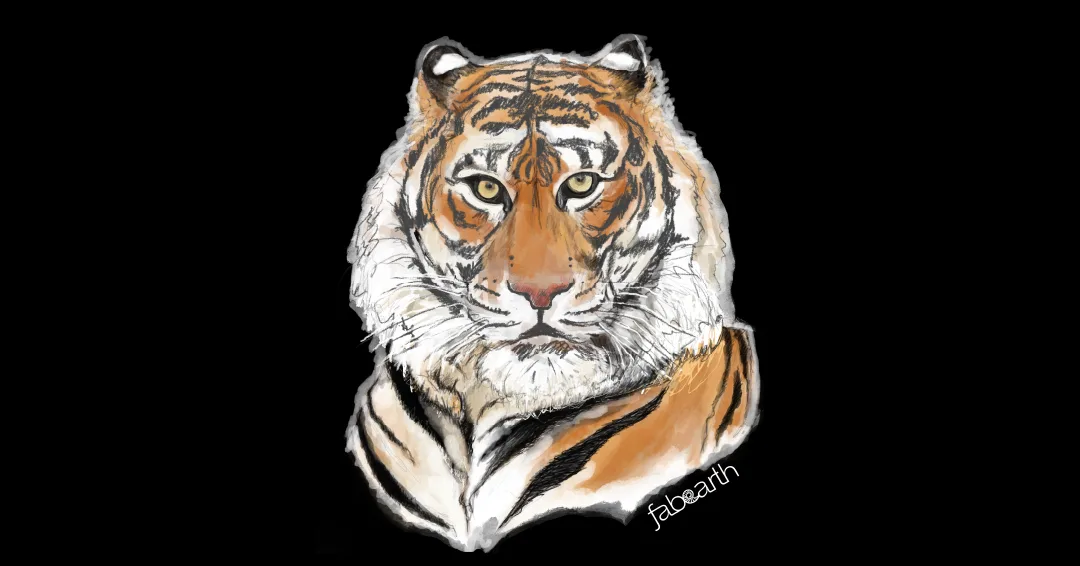
Royal Bengal Tiger
Panthera tigris tigris
The most iconic predator of the Indian subcontinent — and the national animal of India and Bangladesh.
Wear it on a T-shirt


T-shirt Oversize Unisex White
₹899

T-shirt Regular Unisex White
₹899The predator that needs a whole landscape
Royal Bengal Tiger (scientific name: Panthera tigris tigris) is the tiger of the Indian subcontinent: India, Bangladesh, Nepal, and Bhutan. It is the national animal of both India and Bangladesh, woven into the region's forests, folklore, and public imagination.
Its conservation status is Endangered. The tiger's visibility in culture can hide how demanding its survival is. A single adult tiger needs territory, cover, water, prey, and enough distance from people to hunt and breed without constant conflict.
The Bengal tiger is built for stealth and force: a solitary hunter that moves through forest, grassland, mangrove, and riverine habitat. Its main prey includes deer, wild boar, gaur, and other large animals. When prey disappears or habitat breaks apart, tigers are pushed toward livestock and people, and conflict grows.
Why tiger corridors matter
Tiger reserves are not islands. Young tigers disperse, adults need room, and populations stay healthier when animals can move between forests. Corridors let tigers find territory and mates without every movement becoming a dangerous crossing through farms, roads, or settlements.
That is why tiger conservation is also landscape conservation. Protecting a tiger means protecting prey animals, water sources, forest cover, grasslands, mangroves, and the narrow passages between them. When those links hold, the benefit reaches far beyond one predator.
What recovery depends on
India and Nepal have shown that tiger numbers can rise when protection, prey recovery, and local support come together. But recovery is uneven, and it can create new pressure if expanding tiger populations meet shrinking habitat.
The next phase is not only counting more tigers. It is keeping tiger landscapes connected, reducing poaching, compensating and supporting communities living near tiger habitat, and preventing conflict before it turns people against the animal. A tiger is never only a tiger; it is a measure of whether the whole landscape still works.