Hawaiian Crow
Corvus hawaiiensis
The ʻAlalā of Hawaiʻi - a forest crow kept alive in human care while conservationists try to return it to the wild.
Wear it on a T-shirt
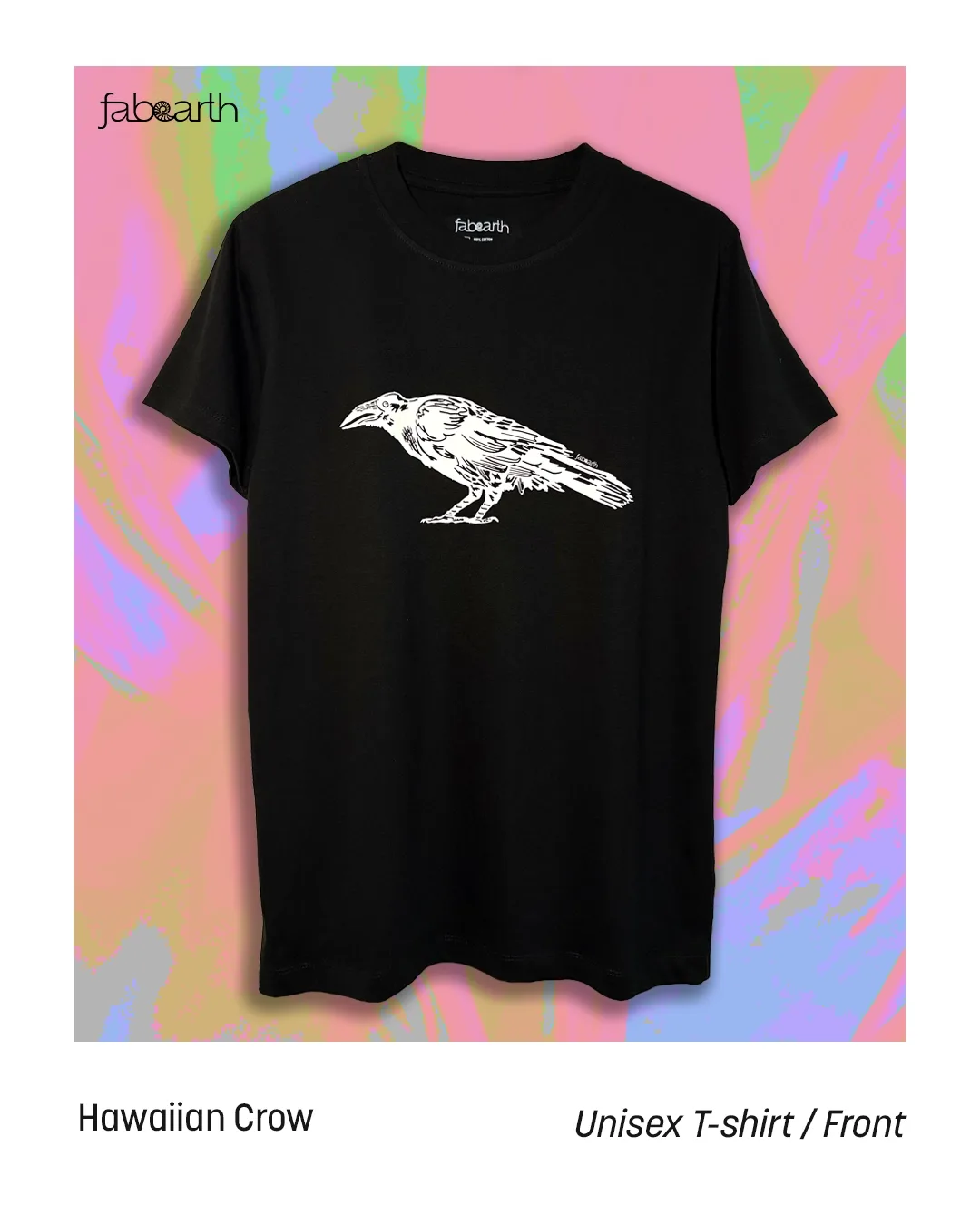
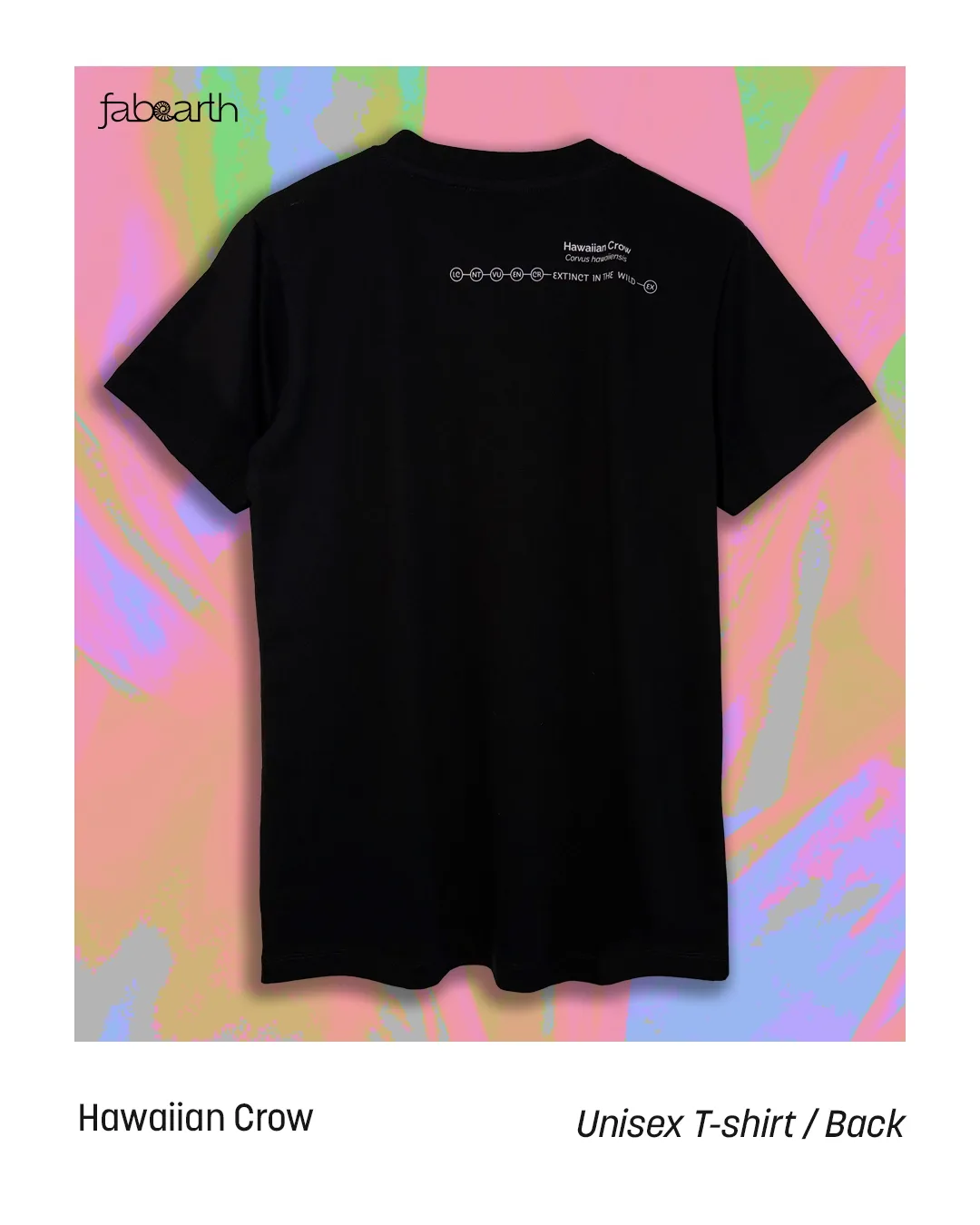
T-shirt Regular Unisex Black
₹899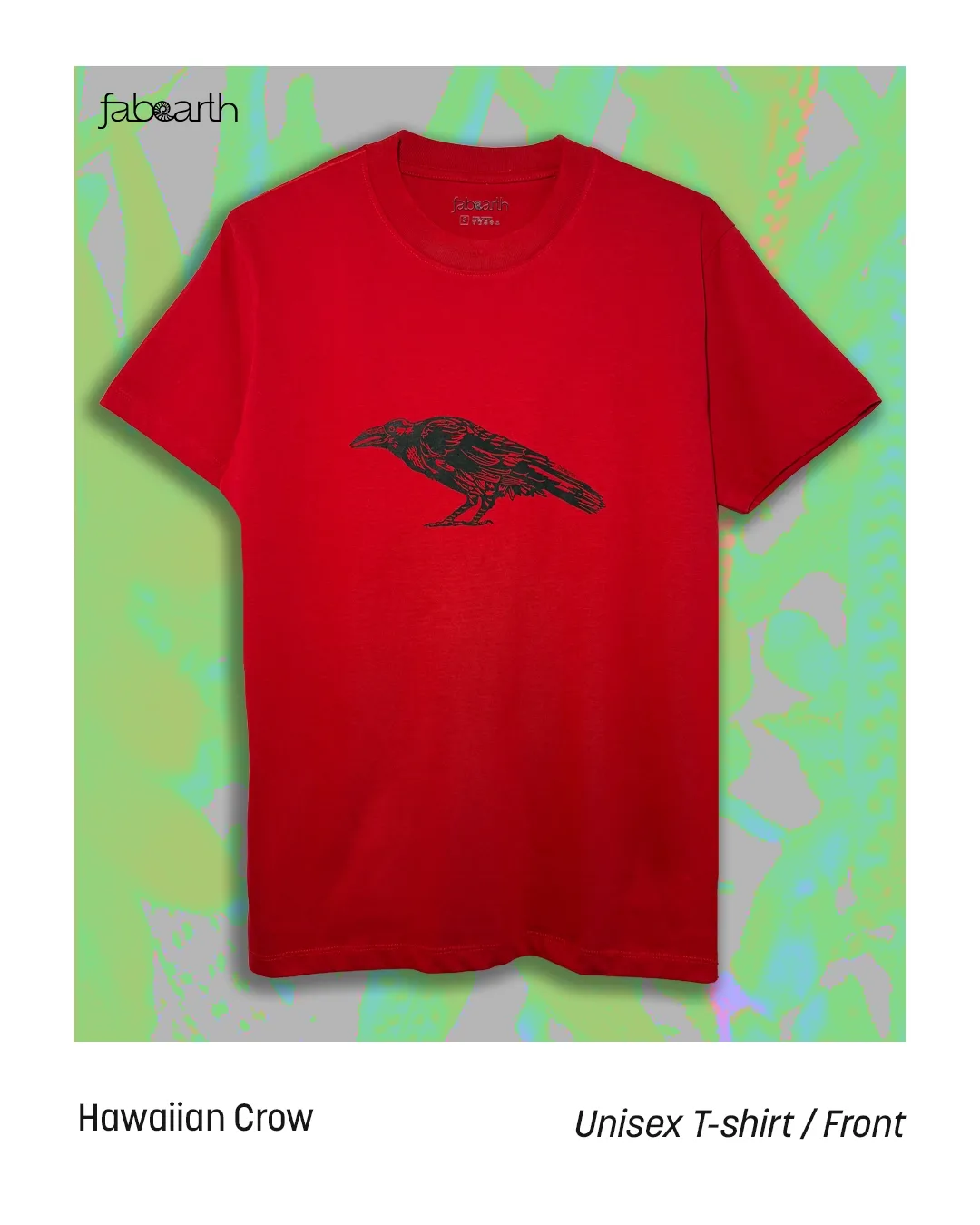
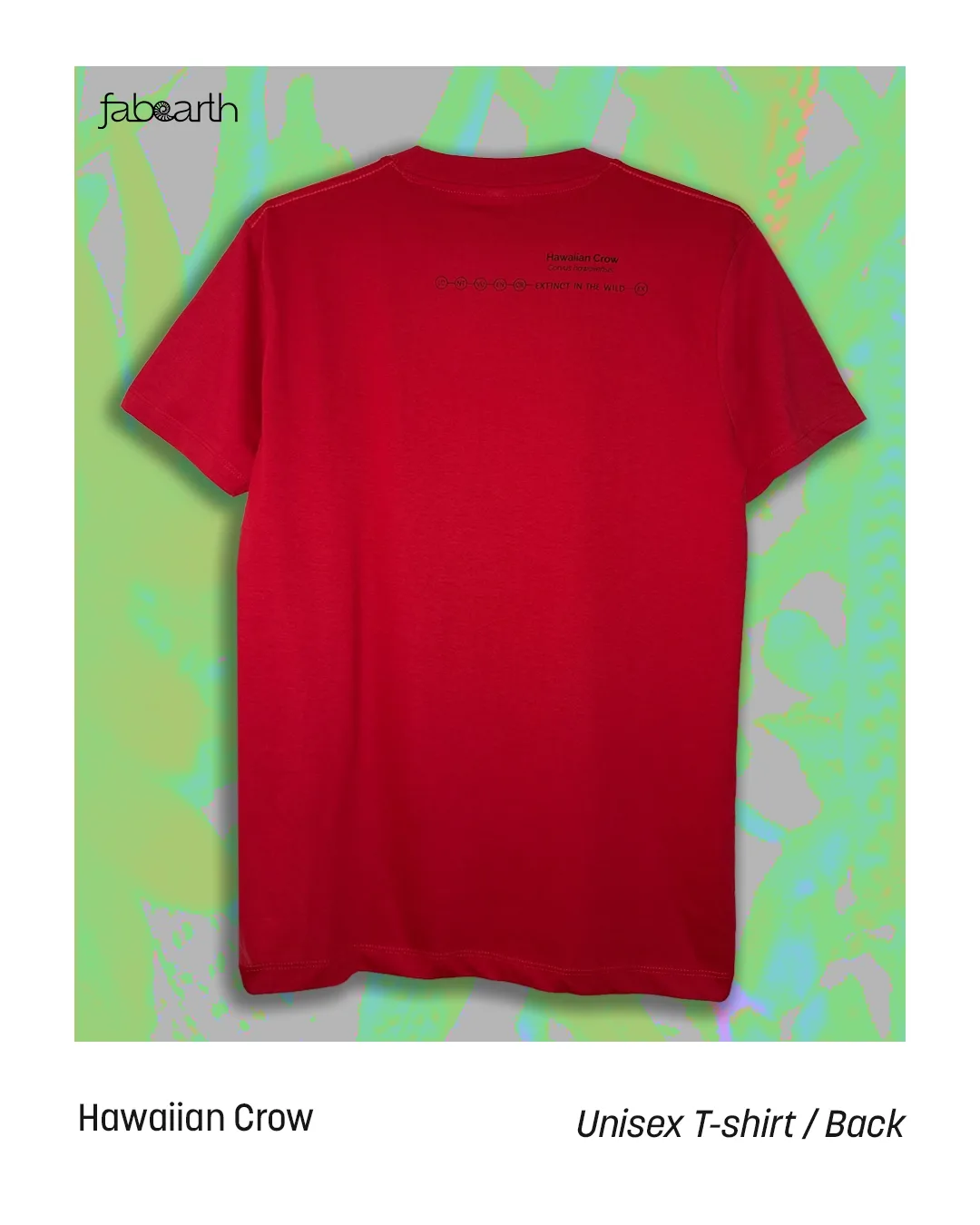
T-shirt Regular Unisex Red
₹899The crow missing from the forest
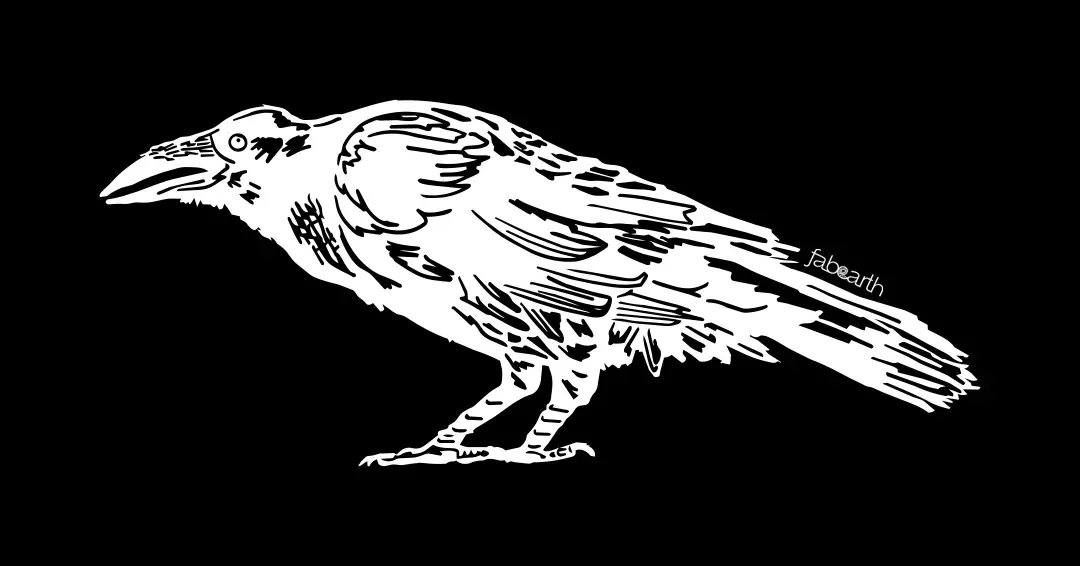
Hawaiian Crow (scientific name: Corvus hawaiiensis) is the ʻAlalā, a dark forest bird found only in Hawaiʻi. It has a thick black bill, brown-black feathers, and a voice that once belonged to the native forest.
Its conservation status is Extinct in the Wild. The ʻAlalā is not gone, but it no longer has a wild population. The birds alive today survive because breeding centers kept the species going after the last known wild birds disappeared.
That happened in 2002. Since then, recovery has been a careful attempt to bring the bird back: choosing release sites, preparing birds for life outside aviaries, and learning what it takes for a crow raised by people to become wild again.
A bird that helps the forest grow
The ʻAlalā is not only rare. It has a job in the forest. It eats fruit, insects, flowers, eggs, and other foods. As it moves through the trees, it can carry native seeds away from the parent plant and help new forest grow.
It is also a very intelligent bird. Captive ʻAlalā have shown tool use, using sticks to pull food from holes. Young crows learn from other crows, so a released bird is not only learning a place. It is rebuilding a culture: where to feed, when to call, what to fear, and how to move as part of a flock.
Why returning is so hard
The ʻAlalā declined because many things went wrong at once: forest loss, introduced predators, disease, and the risks that come when a population becomes very small. By the time a species reaches this point, conservation is no longer one job. It becomes many small jobs that all have to line up.
Earlier releases on Hawaiʻi Island showed both hope and risk. Some birds explored, fed, and behaved like wild crows. Others were lost to predators or poor condition. The Maui release effort uses those lessons in a place without the Hawaiian hawk, one of the major predators in earlier attempts.
The choice of Maui also carries an older memory. ʻAlalā are best known from Hawaiʻi Island, but subfossil evidence shows they once lived on Maui too. A release there is not a random move. It is a return to part of the bird's former world.
What recovery depends on
For the Hawaiian Crow, recovery is not only about counting birds. It means hearing ʻAlalā calls in the forest again, then hearing younger birds answer them.
The next step is slow and practical: keep the breeding population healthy, track released birds closely, protect native forest, and adjust when a release teaches something new. The ʻAlalā is still here because people refused to let the last wild birds be the end of the story. Its future will be built the same way: not by one rescue, but by many careful returns.