Giraffe
Giraffa camelopardalis
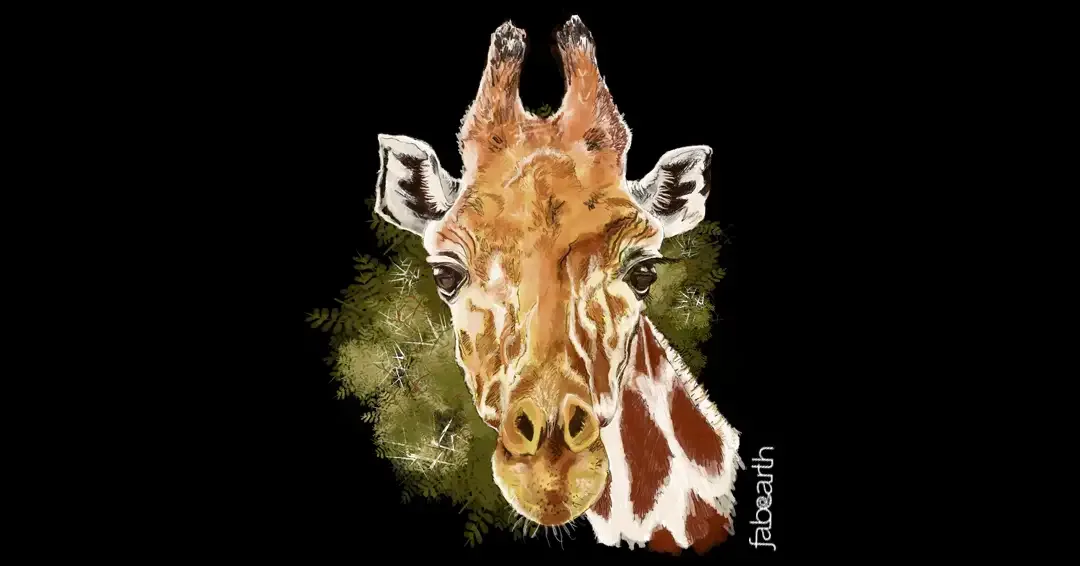
Earth's tallest mammal — blood pressure twice that of a human to keep its brain supplied.
Wear it on a T-shirt
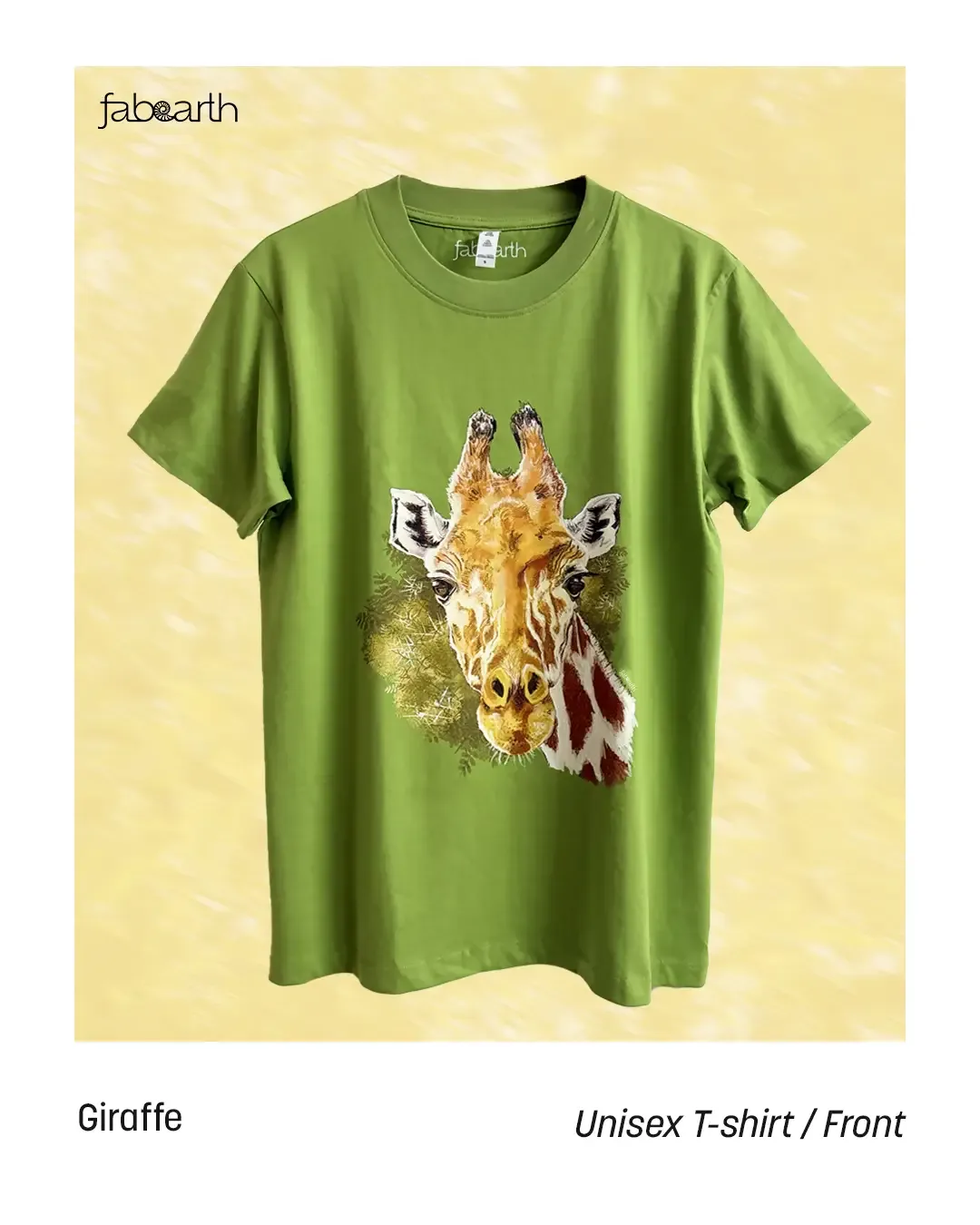
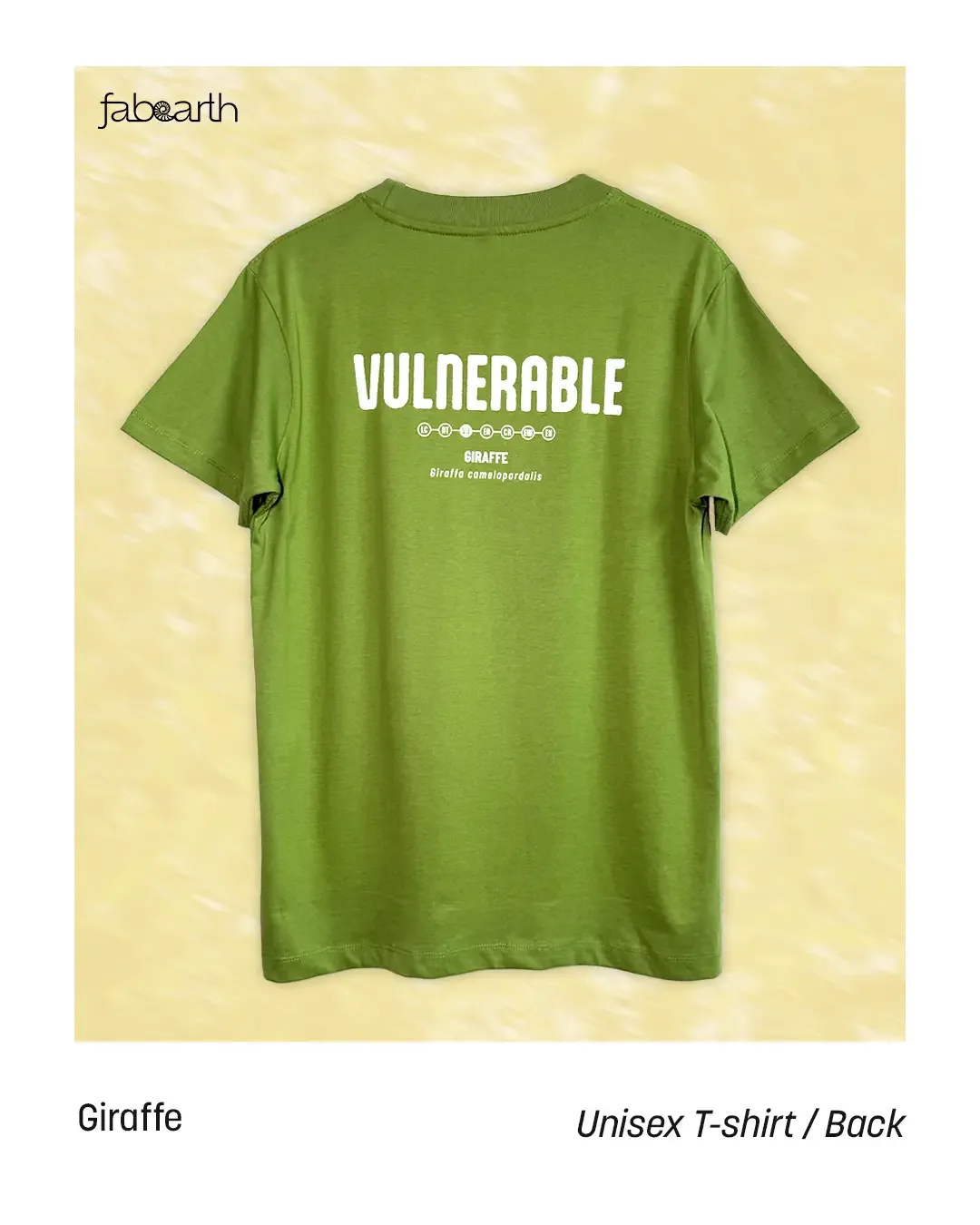
T-shirt Regular Unisex Kiwi Green
₹899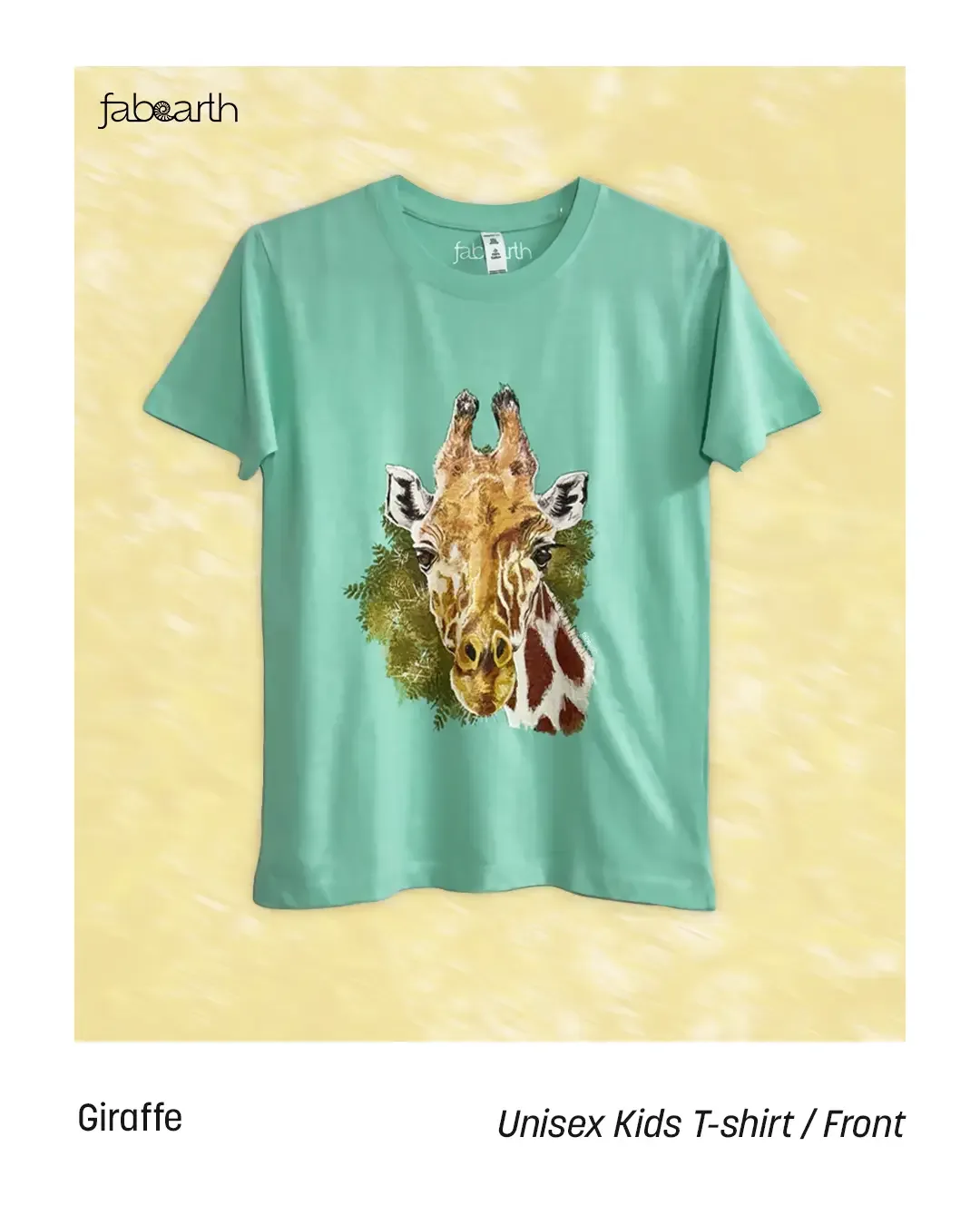
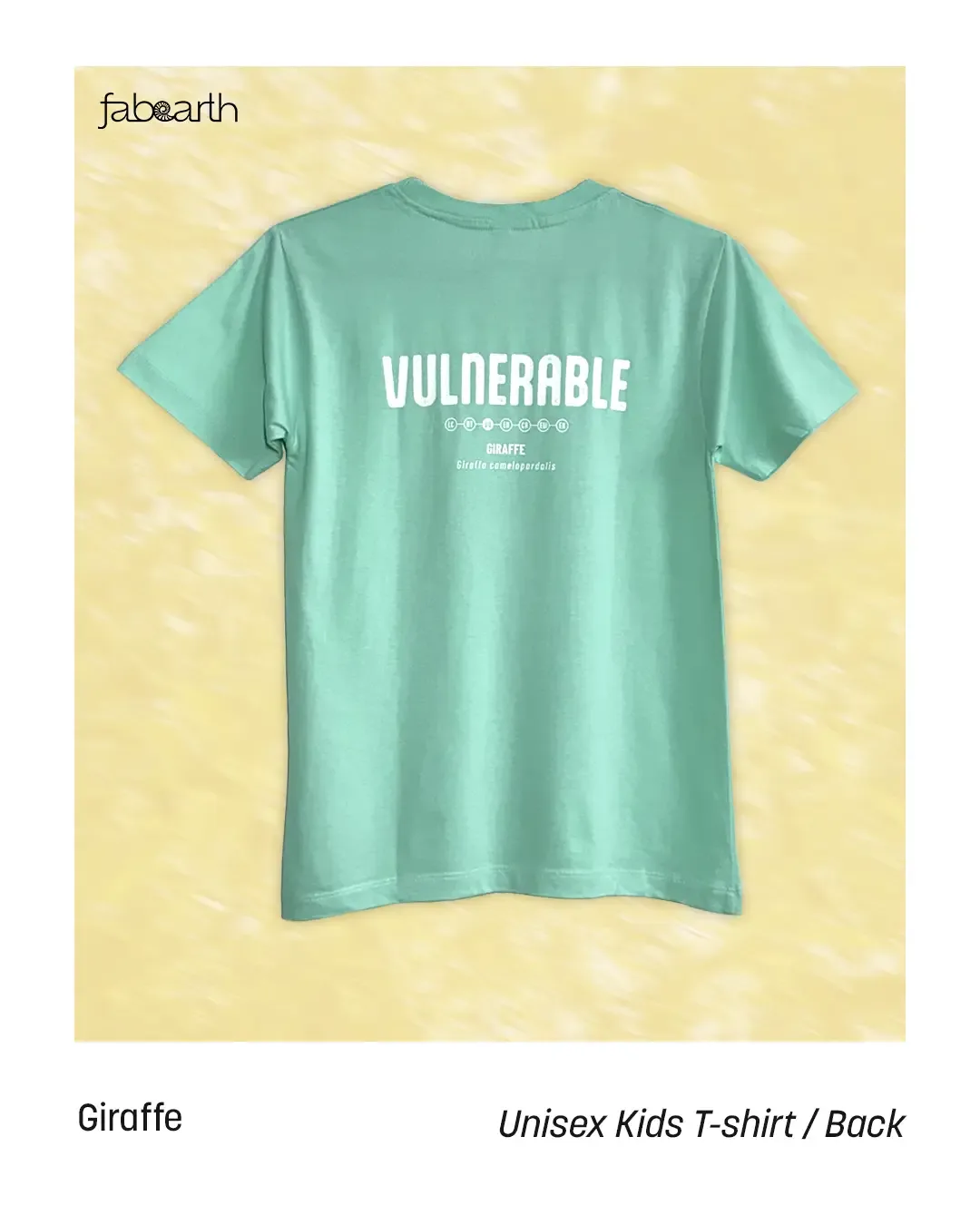
T-shirt Regular Unisex Mint
₹899The familiar animal in quiet decline
Giraffe (scientific name: Giraffa camelopardalis) is Earth's tallest land mammal and the largest ruminant. Its long neck and patchwork coat are familiar worldwide, but its conservation story is less familiar: across parts of Africa, giraffes have been declining quietly.
Its conservation status is Vulnerable. Giraffes are still visible in parks, films, and children's books, but visibility is not the same as security. Across parts of Africa, populations have been reduced by habitat loss, fragmented landscapes, illegal hunting, and conflict around land use.
A giraffe's body is an engineering problem solved by evolution. Its heart has to push blood up a neck that can lift the head several metres above the ground; its blood pressure is roughly double that of a human. The height that makes it iconic also lets it browse leaves and flower buds beyond the reach of most other herbivores, especially from acacia and other savanna trees.
Why height changes a landscape
Giraffes are browsers, not grazers. They shape trees by feeding high in the canopy, pruning branches, opening growth to light, and moving seeds through the landscape. Where elephants can break a tree and antelope crop the lower leaves, giraffes work a different layer of the savanna.
That vertical niche matters. A healthy giraffe population is part of how woodland and grassland stay in motion rather than freezing into one form. Their movement between feeding areas also connects patches of habitat, which becomes harder as farms, roads, fences, and settlements split old ranges into smaller pieces.
What recovery depends on
Giraffe conservation is complicated because the animal is not one simple population spread evenly across Africa. Different giraffe populations live under different pressures, and scientists continue to refine how their species and subspecies should be understood. Some groups are doing better; others have fallen sharply.
Recovery depends on keeping landscapes connected, reducing illegal killing, protecting browsing habitat, and managing human-wildlife conflict before small, separated populations lose the room they need. The giraffe's story is not a sudden crash. It is a quieter warning: even the animals everyone recognises can disappear piece by piece.