Black Softshell Turtle
Nilssonia nigricans
A freshwater turtle of India's Brahmaputra — back from a presumed extinction.
Wear it on a T-shirt
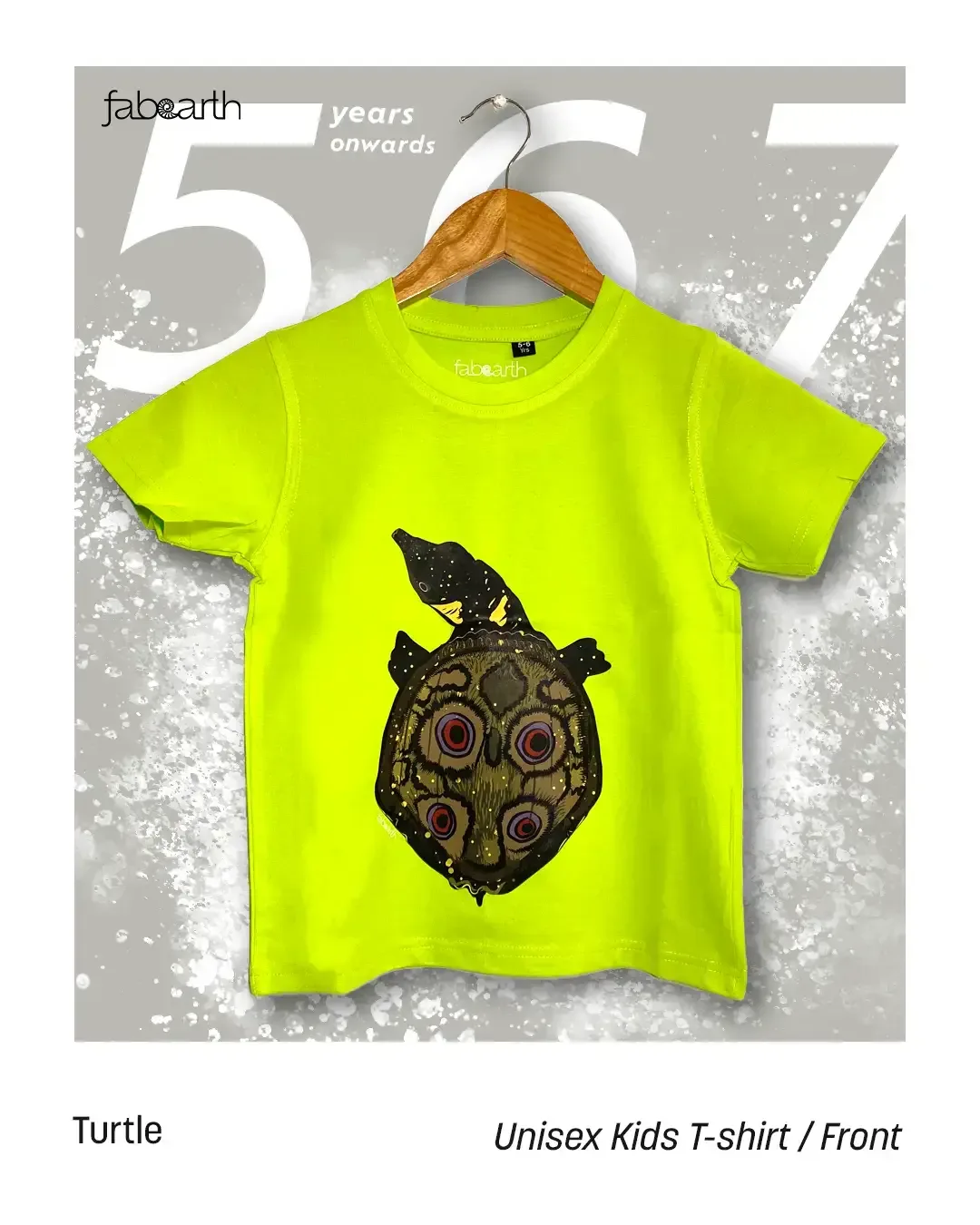
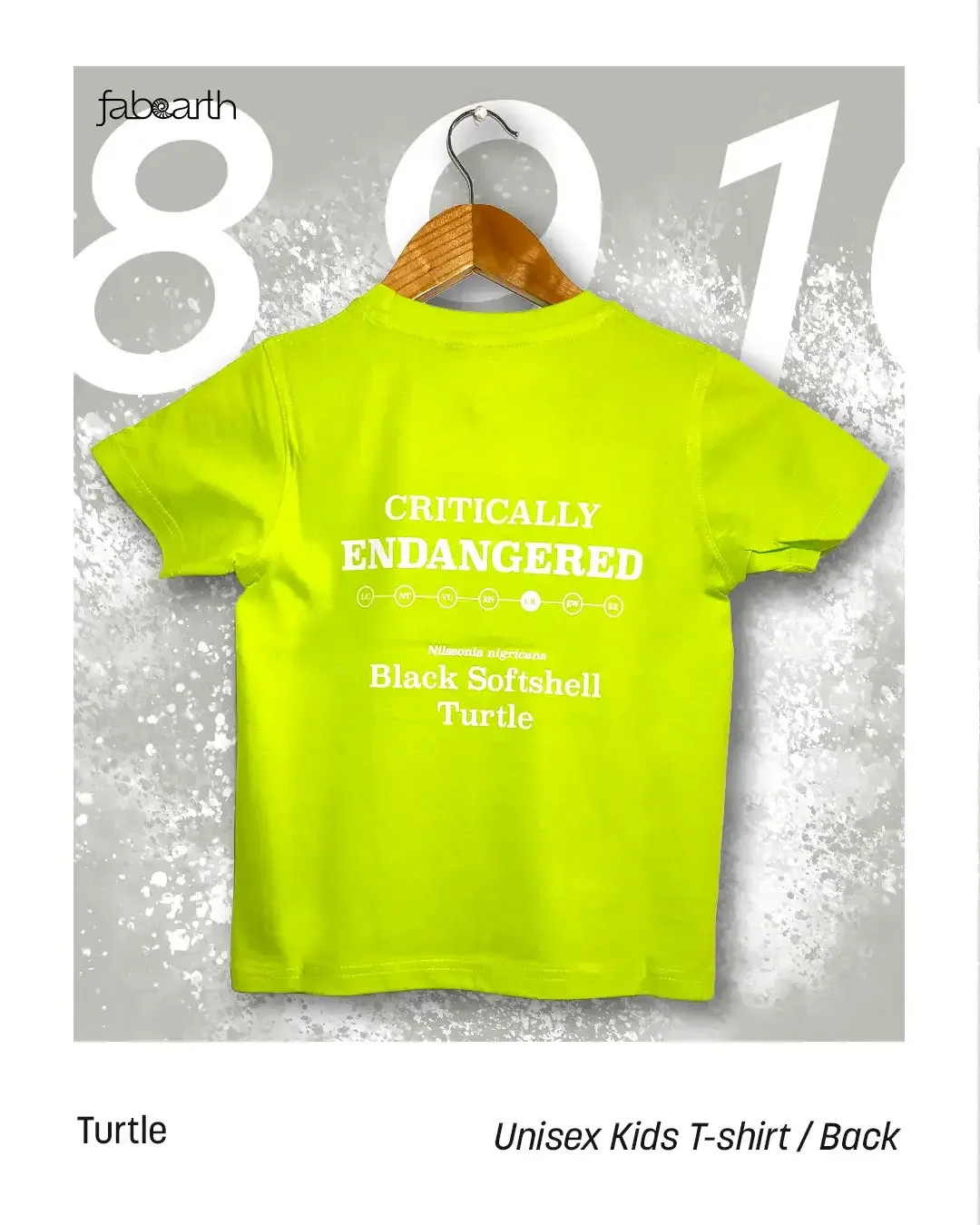
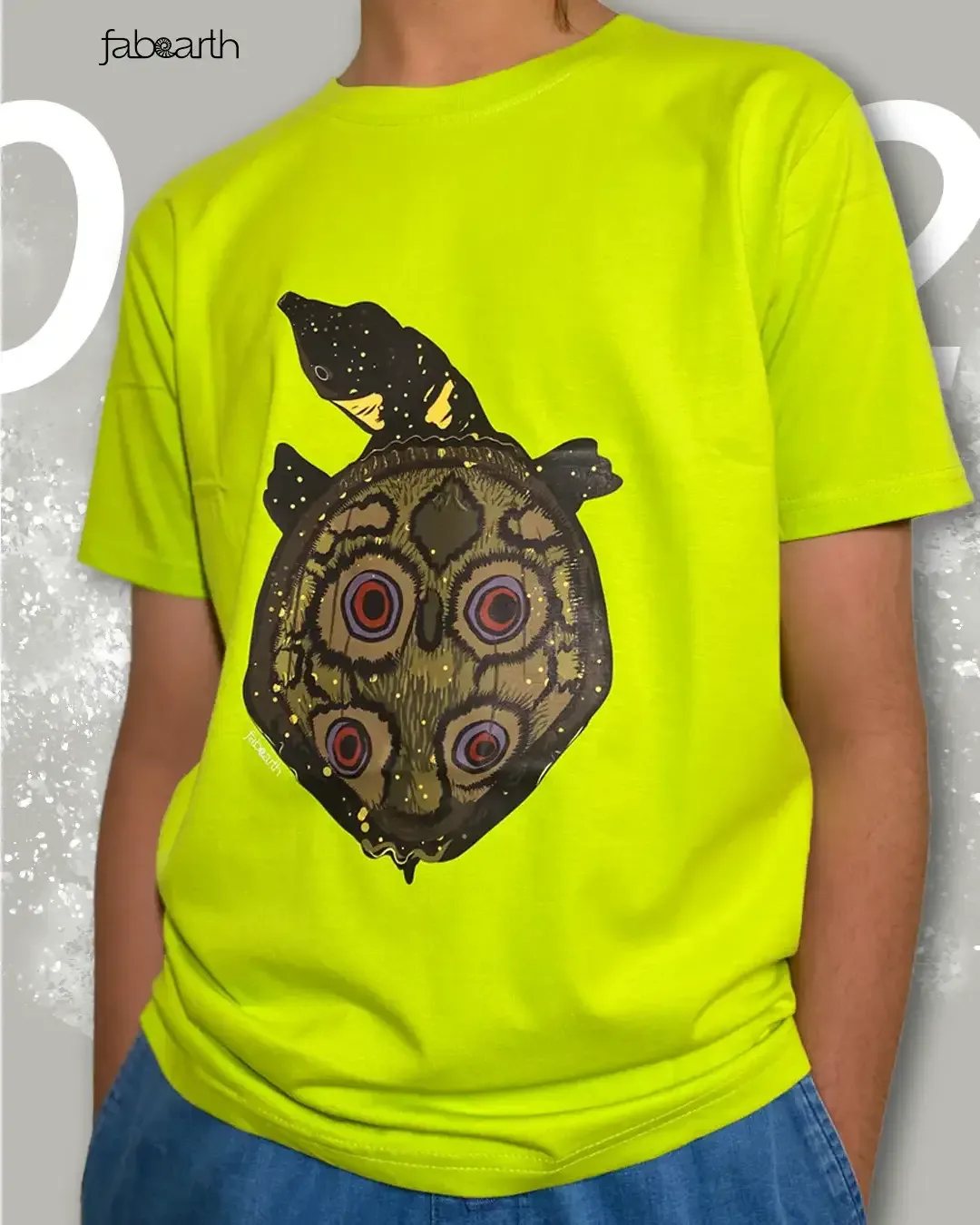
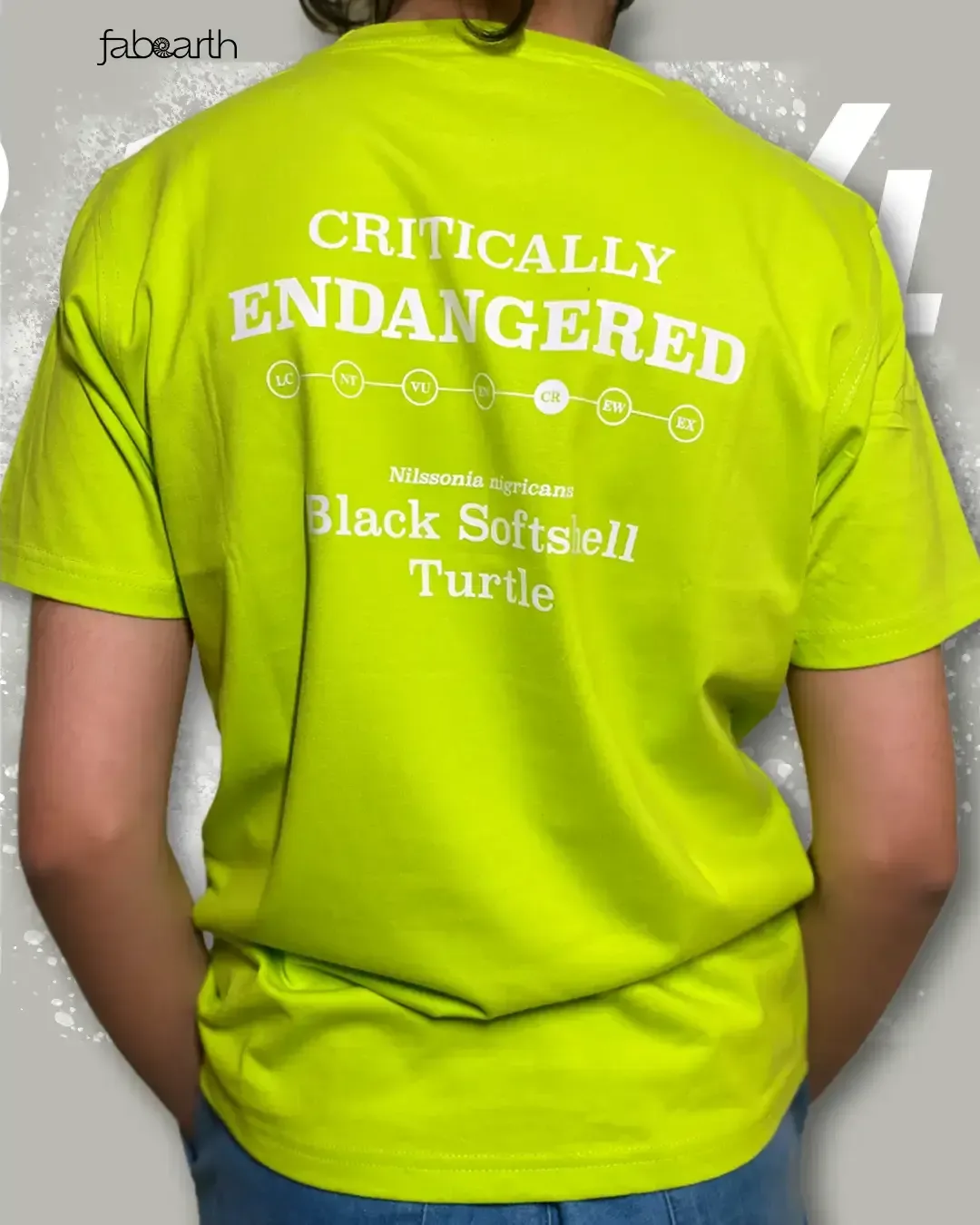
T-shirt Regular Unisex Green
₹899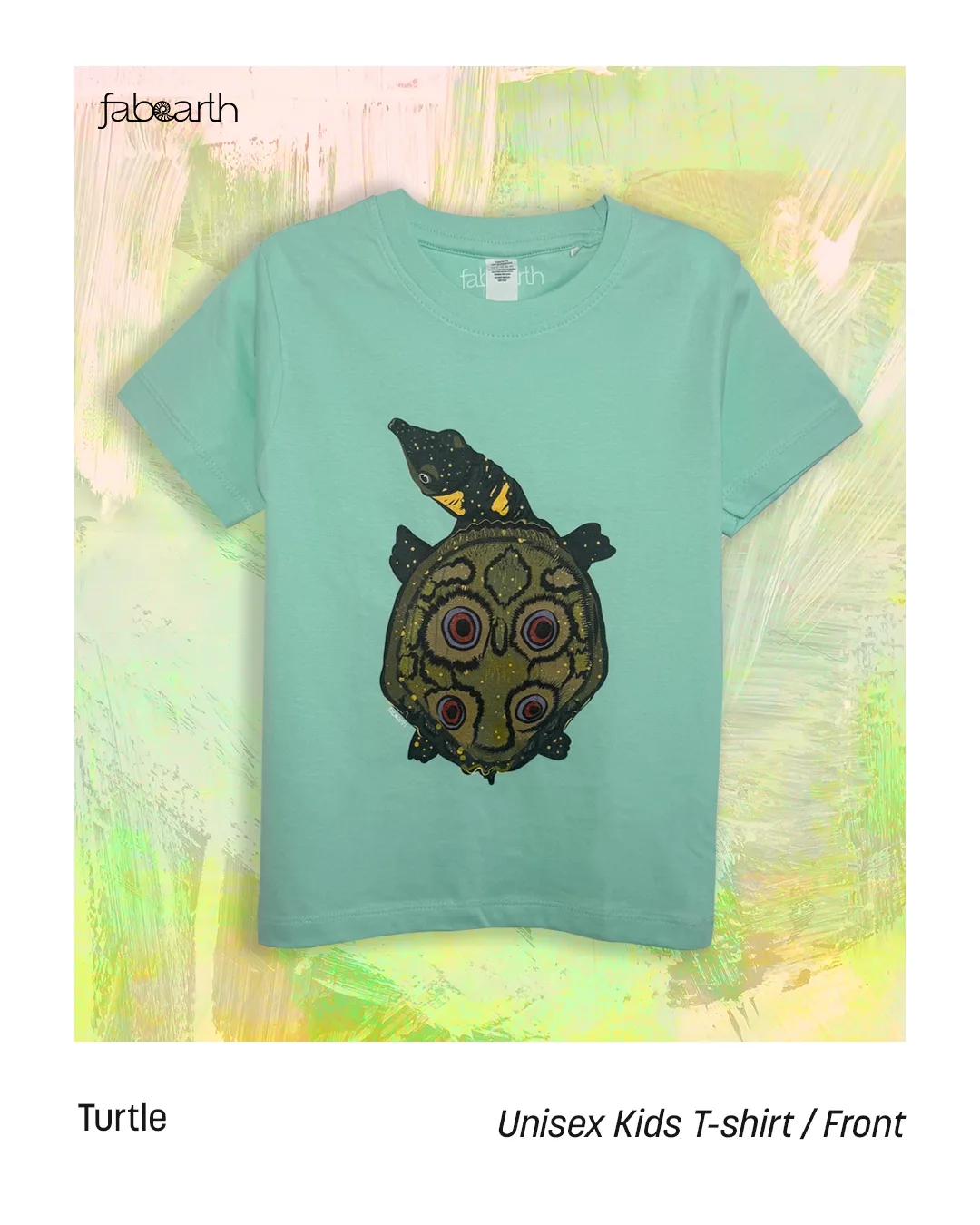

T-shirt Regular Unisex Mint
₹899The turtle saved by temple ponds
Black Softshell Turtle (scientific name: Nilssonia nigricans) is a freshwater turtle of the Brahmaputra basin and adjoining river systems of India and Bangladesh. It is also known as the Bostami turtle, after the shrine pond in Chittagong where one of its best-known protected populations survived.
Its conservation status is Critically Endangered. For years, the species was treated as possibly gone from the wild, but temple ponds in Assam, Tripura, West Bengal, and Bangladesh kept living populations in plain sight. That makes this turtle unusual: faith sites became accidental refuges, even while wild river habitat continued to shrink.
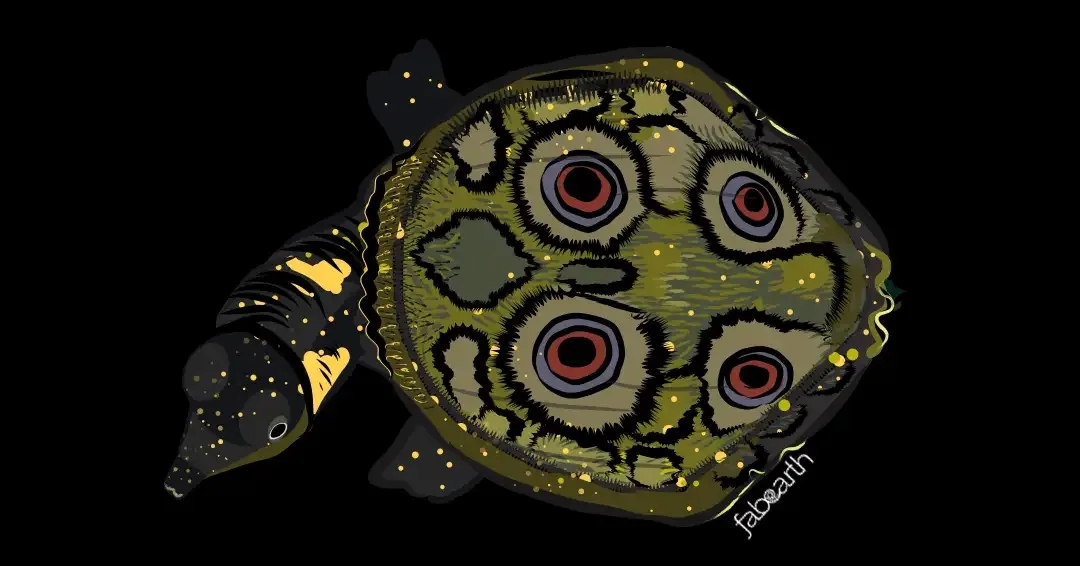
Softshell turtles do not carry the hard, domed shell many people picture when they hear “turtle.” Their flattened, leathery bodies are built for river bottoms, muddy banks, and sudden bursts through water. That body plan makes them well suited to freshwater life, but it also ties them closely to clean ponds, nesting banks, and river systems that are easily damaged.
Why survival in a pond is not enough
Temple ponds protected Black Softshell Turtles from hunting and gave conservationists a place to find breeding adults. But a crowded pond is not the same as a wild river. Poor water quality, unsuitable food, concrete edges, lack of nesting sand, and overcrowding can all turn a refuge into a trap.
That is why recovery work has focused on practical details: improving pond conditions, protecting nests, moving hatchlings to safer head-starting ponds, and eventually releasing healthy young turtles into more natural habitat. The hard part is not only hatching turtles; it is giving them enough space and clean water to grow into a wild population again.
Watch our turtle short film
This film is a broader reflection on turtles, including marine turtles, and the slow pressures they face across water, land, and time.
What the Black Softshell Turtle tells us
This species sits at the meeting point of rivers, faith, and conservation. Temple ponds have helped protect living populations; long-term recovery also needs functioning freshwater habitat: banks where eggs can hatch, water that can support young turtles, and connected wetlands where the species can live without constant human rescue.
The Black Softshell Turtle is a reminder that extinction does not always happen in silence. Sometimes a species survives beside us for generations, visible in a sacred pond, while its wild world disappears around it.